Everything burns eventually.
Burning the olive branches. Two men, the same land, different obsessions. Easter lamb that didn't make it. And parts of the land turn out to be official truffle ground.
Tuscan Dream. April 2026.
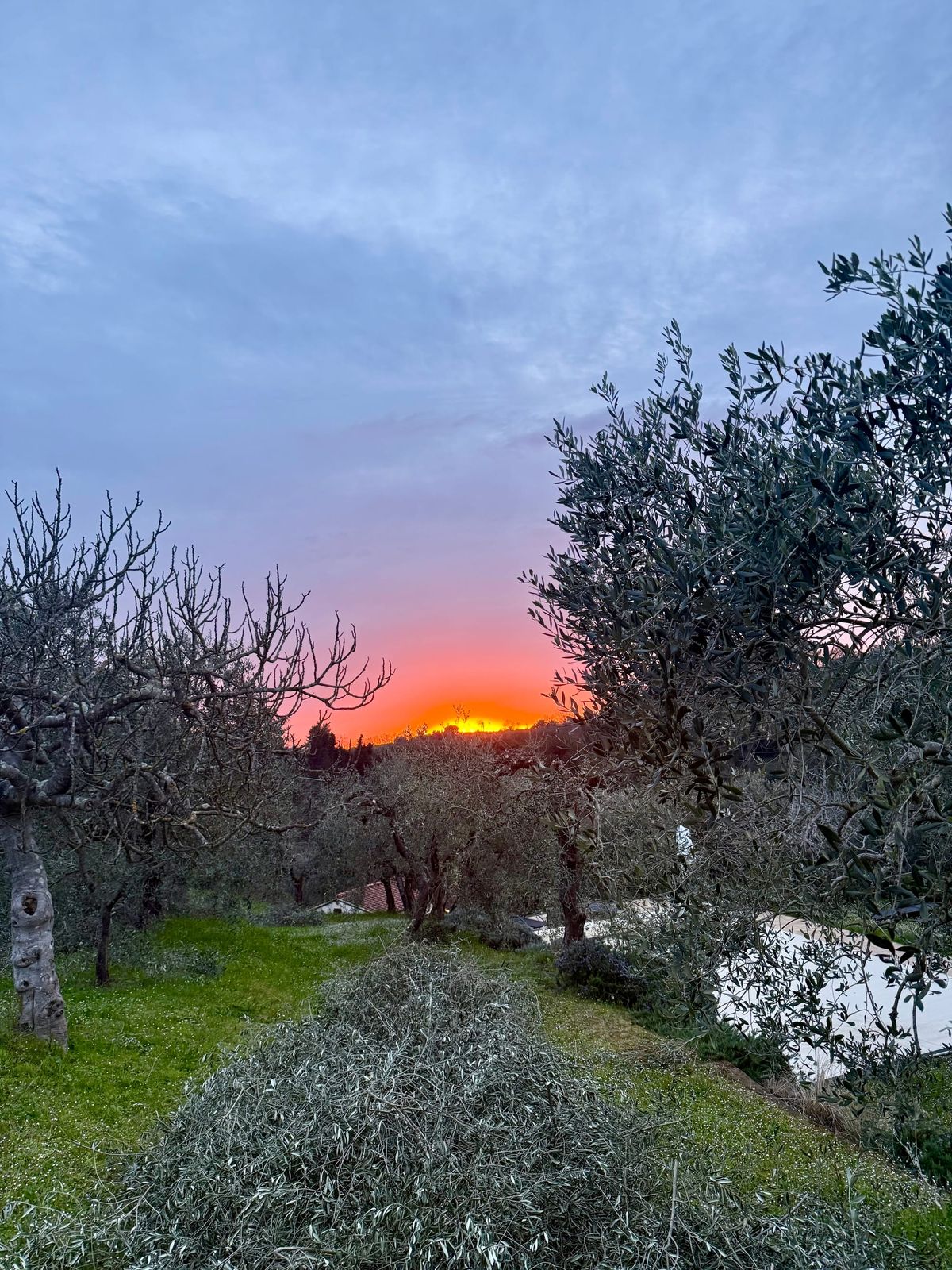
I'm still pruning. Cutting the branches, collecting them, dragging them, piling them. The mounds under the trees are growing faster than I can move them. All the while, I'm thinking: I have to clear all of those.
From up in the tree, I can see my step-uncle below. He is quietly obsessed with cancerous branches. Each time he spots one, he winces, a small personal tragedy — a flash of disgust, then action. He collects them as they're pruned and burns them immediately.
I follow his lead without being entirely convinced. I'm thinking that if it rains, diseased particles wash straight into the soil anyway. Turns out this is true, but there is a risk of the olive knot pathogens wintering in the soil and spreading further - best practice is to burn them immediately.
Stefano arrived to clear some trees overhanging the slope above the agricultural building. We'd been worrying that they might come down in a mudslide if we didn't deal with them.
He's been felling trees since he was eleven. In two hours, he cleared more than two of us had managed in two days — moving through the land, almost dancing, chainsaw in one hand, no glasses, no gloves, no boots. Combat trousers and a t-shirt. For the difficult tree above the building, he asked us to look away. He preferred to work unobserved. He had a chainsaw, so we didn't argue.
Two men with different attitudes to the same land. Makes you wonder what happens to us out here as the years go by.
He left a beautiful pile of wood.
So now there are two piles to burn instead of one.
Burning takes patience - not my strongest quality. Dry branches incinerate — high flames, fast, almost nothing left. New cuttings fizzle and resist. You pile them on, the fire dampens, and you stand there and wait. The hosepipe stays within reach. You watch it intently, making sure it doesn't get away from you.
Occasionally, Anna drops cut grass on it. Or a handful of lavender. The smoke slows, thickens and turns almost sweet.
It's backbreaking work. Hands full of branches, face full of leaves, dripping sweat, stinking of smoke. Pushing uphill with another armful, thinking about my step count.
As the light goes, the fire changes. The flames are higher in the dark, more vivid. You stop working and just watch — the movement, the heat on your face, the way it breaks down everything you feed it, branch by branch, twig by twig.
You dampen it down overnight. In the morning, the ash pile has shrunk. It's still warm. Eventually, my step-uncle tenderly drops the cooled ashes at the base of the trees.
Two-thirds of the wood burned. Fifteen trees still to prune. Two-thirds of the trees sprayed. The pile Stefano left, waiting.
The Land: Pruning and burning continue. Grass cut and looking sharp — the brush cutter is out next for the harder shrub. Flower beds are being cleared. The pool tiles need a high-pressure clean before the first guests arrive. Looking back at old documents, parts of the land are designated Aree Tartufigene — official truffle ground. Need to find a dog. Or follow a cinghiale (boar).
The Villa: Thirty-eight shutters painted, plus the window frames. The garden fence was replaced after twenty years. All castagna wood. The pergola still needs to be varnished. Spring clean planned. First guests end of April.
The Table: Easter weekend. Sunday — caponata, foie gras, salad. Then the agnello burned beyond rescue. We ate without it. The Barolo made up for it. Colomba and torta di mele for dolce. Made up for the lamb on Monday — bistecca fiorentina, rostincana and salsicce with patate rosti. Chianti. Colomba di Pasqua again.
Tuscany: Siena via Volterra. The roads were empty. Olive groves, vineyards, hill town after hill town. Then you're sitting in the Piazza del Campo, the Palazzo Pubblico in front of you, the sun on your face.
The trees are in better shape than I've ever seen them. I walk the grove, feeling the smug pride of someone admiring his freshly manicured lawn.
No guarantees — nature doesn't work that way. But this year feels different.
If you want to be here for the harvest, The Yield retreat runs 11–17 October.